
Discover ESA queens: genetics and selection for your hive
Queen selection and management matter for colony development. ESA’s programme focuses on Ligustica selection and colony evaluation. Breeding objectives must be distinguished from measured outcomes: productivity, behaviour and health also depend on environment, season and apiary management.
ESA queen genetics: selected stock for modern beekeeping
The ESA programme aims to preserve and improve Ligustica traits. Colonies are assessed for development, behaviour, production and observable health traits. A breeding objective does not guarantee performance in every queen or colony.
Genetics contributes alongside environmental conditions and management. Traits relevant to Varroa control require specific assessment and documented comparisons. They do not make a colony infestation-free or justify stopping monitoring and health management.
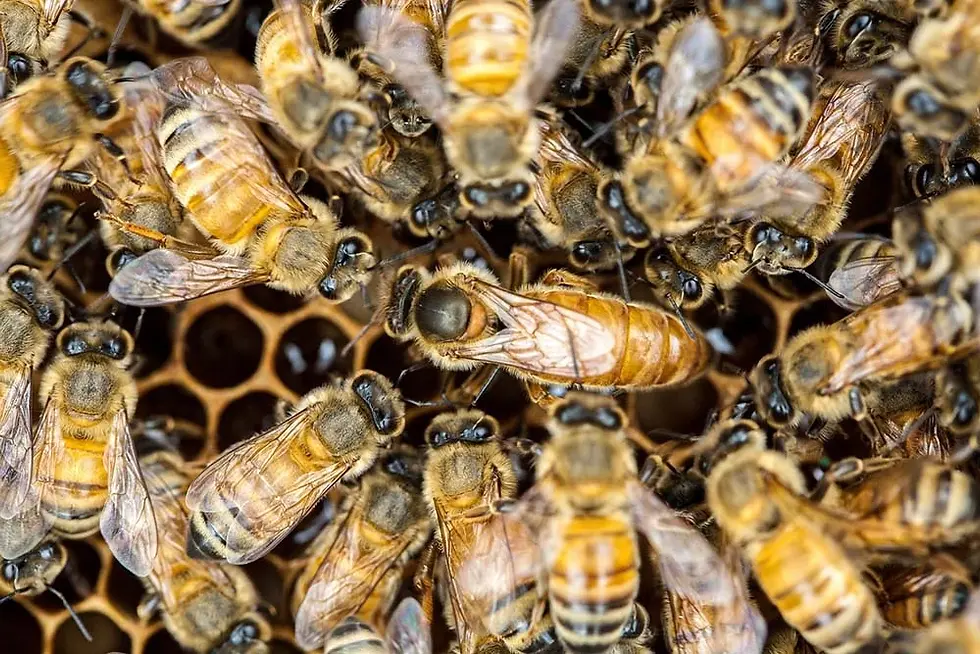
Selection requires repeated observations and comparisons under comparable conditions. A single season cannot demonstrate stable improvement: genetic effects must be separated from environmental ones.
Selection and rearing: how ESA queens are produced
Rearing begins with selecting mother colonies and larvae for queen production. Larvae are placed in queen-rearing colonies, where nurse bees feed them. Selection criteria and recorded observations support breeding; without documented results, these should not be described as conclusive laboratory tests.
Natural mating and instrumental insemination are different routes. Observing laying and brood after mating helps assess the queen’s start, but does not directly verify the quality of every mating flight.

Colony development, production and behaviour continue to be assessed. These observations guide future decisions. The programme seeks improvement without promising uniform or constant gains in every apiary.
What happens if there are two queens?
Two queens can coexist during natural supersedure, without an immediate duel. Their presence alone neither identifies the reason for replacement nor automatically requires removing one.
Before intervening, observe laying, brood, queen cells and colony condition. Supersedure, swarming and introducing a queen are different situations requiring different assessments.
Interventions should reflect management aims and colony condition. Avoiding hasty removal reduces the risk of leaving no laying queen. Seek advice from a beekeeping specialist if uncertain.
Practical breeding aims and limitations
Selection can target useful management traits, assessed through colony observations and comparisons over time:
Production and development: assess these in colonies under comparable conditions; increased honey yield is not guaranteed.
Health traits: breeding objectives require specific trials and do not replace monitoring and health management.
Behaviour: gentleness is assessed at colony level; normal inspection precautions remain necessary.
Continuity of evaluation: repeated observations guide colony selection without guaranteeing queen lifespan or absence of swarming.
These aims guide the programme. Actual performance must be observed and documented under your own apiary conditions.
Strategies for integrating ESA queens into your apiary
To benefit from ESA queens, use practical strategies that support introduction and management. Recommended practices include:
Hive preparation: before introducing a queen, check colony health and, where necessary, remove the old queen or any replacement queens.
Gradual introduction: use suitable cages and a protocol appropriate to the colony; a cage alone does not guarantee acceptance.
Post-introduction monitoring: in the following days, observe bee behaviour and signs of acceptance, including queen care and regular egg laying.
Fertility checks: periodically inspect eggs and larvae to assess queen fertility and ensure continued colony development.
Genetic renewal: to maintain quality, plan periodic requeening, replacing poorer performers with newly selected ESA queens.
Careful introduction and follow-up help assess acceptance and colony development. Requeening alone does not resolve disease or management problems.
An investment in beekeeping’s future
Selection requires continuous observation, comparison and choice. Its value lies in connecting objectives with verifiable data while preserving diversity and considering apiary conditions.
Before purchasing, clarify queen type, mating method, availability and delivery conditions. Consult the method and laboratory pages to learn about ESA’s approach, and current queen information when choosing supplies.
Explore the ESA breeding programme. For supplies, consult the Queen bees page and current store availability.


Comments