
INSTRUMENTAL INSEMINATION
Let's plan the future of your beekeeping together


Instrumental insemination lets us control the mating of queen bees. It supports selective breeding, conservation and the maintenance of genetic diversity. Planned crosses help us select for desired traits over successive generations, and crossing distinct maternal and paternal lines can promote hybrid vigour.
The technique requires experience in rearing virgin queens and preparing mature, healthy, well-fed drones for semen collection. It allows breeders to use several paternal lines in a single season or to control paternity through single-drone insemination.

Drone selection and semen collection
We select drone-producing colonies for traits that match our breeding goals. We monitor colony health and nutrition so that mature drones are well fed and in good condition when we collect semen. These conditions help preserve semen quality and viability.

Insemination
Regular practice and ongoing training help us achieve a reported success rate of 80–90% in our own work. We keep the laboratory clean, sterilise the instruments and use suitable equipment and materials to refine the procedure.

Colony assessment
We monitor colonies regularly and use hygienic behaviour tests, assessments of Varroa resistance and laboratory analyses to decide which lines to breed from. During these evaluations, we avoid supplementary feeding and the addition of frames carrying bees from other colonies, so we can observe how each colony expresses the traits we are assessing.
Pedigrees: F0, QPQ and DPQ
In our breeding programme, F0 identifies the foundation stock from which a line begins. It marks a position in the pedigree. On its own, it says nothing about superior quality, purity or genetic improvement. QPQ (queen-producing queen) is a queen from which we rear future queens. DPQ (drone-producing queen) is a queen used to produce drones for the programme.
Drones normally develop from unfertilised eggs and are haploid: each inherits one set of chromosomes from its mother. To build the paternal group, we can rear daughter queens from selected founders and use the drones they produce. Drones from a single DPQ can differ genetically and each carries only one set of chromosomes. Segregation and recombination occur as the queen produces eggs.
We identify colonies, queens and drone groups so we can trace each cross to its breeding stock and the offspring we will assess. Pedigree accuracy also depends on checks and records kept during rearing.
Genetic diversity and how we assess results
Crossing over reshuffles parts of the chromosomes during meiosis in the queen. Repeating a cross between lines can therefore produce daughters that express different combinations of traits. When choosing breeding stock, we balance the traits we seek with preserving genetic diversity and limiting inbreeding.
Single-drone insemination gives precise control over paternity and yields less paternal diversity in the colony than using several drones. The mating design depends on the aims of the programme and the follow-up assessments. Any production benefit has to be demonstrated.
We start with the foundation colonies, assess their traits, record morphometric and pedigree information, choose maternal and paternal lines, make planned crosses, rear the offspring and assess them again. Morphometric analysis helps characterise the breeding stock. Colony performance requires separate evaluation.
We compare several groups of offspring and observe them for at least one full production season before describing a cross as an improvement. We continue assessing later seasons and generations. Results also depend on the environment and management.
Hygienic behaviour: what we measure
HYG stands for hygienic behaviour, the ability of worker bees to detect and remove compromised brood. The pin test measures the response to damaged brood and provides an indicator of hygienic behaviour. VSH and Varroa resistance require separate evidence.
VSH (Varroa-sensitive hygiene) refers to the removal of Varroa-infested brood. SMR (suppressed mite reproduction) describes reduced mite reproduction in the brood, which VSH can help bring about. Each trait needs specific observations. The terms describe distinct traits and carry no commercial guarantee.
Breeding programmes for your apiary
We can work with you to design a breeding programme using the stock in your apiaries, taking into account your business goals, local conditions and the data you already have. The work covers choosing foundation colonies, preparing maternal and paternal lines, making crosses and planning how to monitor their offspring.
The programme requires staff experienced in grafting larvae and handling queen cells, virgin queens and nucleus colonies, as well as suitable facilities. We agree in advance on responsibilities, preparation of breeding stock, timing and record-keeping. Queen numbers, availability, costs and travel are worked out for each project.
For an initial discussion, tell us where your operation is based, your breeding goals, what stock is available, what colony data you have and your expected timing. This helps us assess feasibility and prepare a proposal suited to your operation.


We don’t have any products to show here right now.
 Microscopio B159RPL |
|---|
 Tubo 100 2 |
 Riduttore 3 |
 Punta inseminazione |
 Bombola CO2 - 2 |
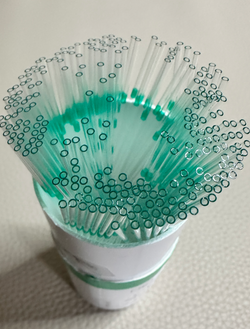 Tubo 50 1 |
 Pinzette 1 |
 Camicia 2 |
 Tubo 50 2 |
 Raccordo capillare-siringa 2 |
 Portaregina 1 |
 Diffusore portaregina 2 |
 Ganco ventrale 3 |
 Tubo 100 1 |
 Ganco ventrale 7 |
 Ganco ventrale 4 |
 O-ring |
 Gancio ventrale 1 |
 IMG_1077 |
 Gorgogliatore 1 |
 Punta capillare 2 |
 Stereoscopio trinoculare |