
Black queen cell virus (BQCV): a practical analysis of associations

The “black queen cell virus” in honey bees (Black Queen Cell Virus – BQCV) causes a viral disease affecting mainly queen larvae, which darken and die before emergence.
Infection can occur vertically, when a virus-carrying queen lays infected eggs, or horizontally, through young workers cleaning recently vacated cells that contained infected individuals, or infected nurse bees feeding queen larvae with contaminated royal jelly.
🦠 1. Direct viral infection (BQCV)
The primary cause is infection with Black Queen Cell Virus, a virus in the family Dicistroviridae. The virus replicates in queen larvae, causing necrosis and darkening of the queen cell. Vertical transmission is one possible route, alongside horizontal transmission.
🐝 2. Transmission through nurse bees
Nurse bees can pass the virus to larvae through:
contaminated royal jelly;
oral contact;
cell cleaning.
Queen larvae are particularly exposed because they receive more frequent and more abundant feeding.
🧪 3. Contamination of equipment and beekeeping materials
The virus may also spread through:
contaminated combs and hives;
queen-rearing equipment.
🌡️ 4. Environmental and nutritional stress
Other factors that can weaken colonies and increase susceptibility:
insufficient protein nutrition (monocultures or poor forage);
exposure to pesticides, fungicides and foliar fertilisers;
extreme weather;
transport stress.
🧫 5. Coinfection or stress from Nosema spp.
Infection with Nosema apis or Nosema ceranae has been associated with BQCV in several contexts. Nosema can impair adult bee physiology and defences; coinfection can increase mortality, although increased viral replication or colony-level disease is not a universal consequence.
🐝 6. Other parasites
The mite Varroa destructor is not considered a primary BQCV vector, but mite-related stress can favour secondary viral problems.
It is useful to examine unexpected or management-induced stresses on immunity, their association with Nosema spp., and the potential amplification of problems through inappropriate beekeeping practices.
Among unexpected stressors are extreme weather events leading to unanticipated nutritional stress, such as spring frosts and sudden temperature increases, as well as incoming nectar and pollen contaminated with pesticides, fungicides or foliar fertilisers. These conditions can weaken bees’ overall defences.

For management-induced stressors, relevant practices include those
associated with breeding operations: removing combs to create nucleus colonies; reusing food-store frames from colonies infected with Nosema spp. or BQCV; failing to renew comb or renewing less than the suggested 30% annually (not a universal disease threshold); seasonally inappropriate feeding; and chemical treatments against Varroa destructor.
For unexpected stresses, we can try to anticipate them and put bees in the best condition to cope. Management-induced stresses offer more opportunities for prevention. One frequently reported practice is indiscriminate oxalic acid (OA) use: repeated applications to the same bee generation at varying concentrations. OA can be relatively safe when used correctly, but this does not mean that it leaves no residues whatsoever. It remains a corrosive acid and can harm bees if misused.

🧪 Damage oxalic acid can cause to bees
Oxalic acid is relatively safe only when used correctly. Overdosing, overly frequent applications or unsuitable environmental conditions can cause adverse effects:
🐝 Effects on individual bees
Damage to the gut epithelium ➜ irritation or necrosis of the midgut;
Reduced longevity of adult bees;
Physiological stress (especially at excessively high or low temperatures).
🧬 Effects on the colony
A reduction in nurse bee numbers (a potentially vulnerable group);
Unusually high bee mortality after treatment;
Possible queen loss in extreme overdose cases.
It is particularly useful to examine oxalic-acid-related damage to bees and its possible relationship with Nosema spp.:
🦠 Relationship between oxalic acid damage and Nosema
Nosema (Nosema apis or N. ceranae) comprises microsporidian parasites that infect the midgut of bees. This is where a possible connection arises 👇
🔗 Why they may be linked
A shared target:
Several studies show that oxalic acid can also influence bee physiology, including changes in the activity of cuticular proteases and possible changes in the gut microbiota. Such alterations may affect natural defences (innate immunity and the microbial barrier) when applications are improper or repeated. Chemical stress and dysbiosis can be associated with altered Nosema loads; Nosema damages gut epithelial cells.
Oxalic acid can irritate or damage those same cells. → Therefore, bees already weakened by Nosema may be more vulnerable to oxalic acid effects, depending on exposure.
A single Nosema-infected bee can carry more than 1,000,000 spores. Estimates of 30–90 spores per bee have been reported as sufficient to initiate infection in some contexts; this is not a universal threshold and depends on the species, bee age and experimental conditions.
Increased gut permeability: If Nosema has already damaged the epithelium, oxalic acid exposure may:
increase physiological stress;
worsen tissue damage;
further reduce bee longevity.
Indirect effects on the colony: Nosema-infected bees may have a reduced ability to feed brood, thermoregulate and fly. Excessively harsh treatments (high OA concentrations or repeated applications) can amplify this functional decline.
Caution: long-term effects on the microbiome and epithelial stress depend on dose, administration route and combinations with other products. Literature reports both beneficial effects and potential adverse effects, so skilled, targeted use is essential
🧭 Summary
Oxalic acid is useful against Varroa but can damage the bee gut if misused;
Nosema affects the same organ, so already infected bees may be more sensitive to treatment;
The combination of Nosema and improper treatment may aggravate colony mortality and stress.
Having considered possible epithelial damage and susceptibility to Nosema, we can examine the relationship between Nosema spp. and BQCV. This should not be treated as a proven chain leading inevitably to exponential viral growth.
Nosema ↔ BQCV (Black Queen Cell Virus) association

Scientific studies report co-occurrence and associations between Nosema (especially N. apis and N. ceranae) and BQCV. Some studies find higher BQCV loads or clinical signs in colonies with Nosema; BQCV is frequently reported in queen-rearing operations. The strength and consequences of the association vary. It is plausible that immune impairment or Nosema-related gut dysbiosis may facilitate BQCV replication or clinical expression in some conditions.
BQCV can be transmitted by faecal–oral routes and through nurses feeding brood. Coinfection with Nosema can therefore be relevant to disease spread and expression in queen cells, without proving that Nosema always increases transmission.
The role of Varroa destructor in viral dynamics
Varroa is a major driver of increasing loads of viruses introduced during feeding, such as DWV. The direct role of Varroa as a BQCV vector is less clear: BQCV is a dicistrovirus often transmitted orally or by contact and associated with Nosema. However, high Varroa levels increase colony stress and general susceptibility to viral infections, altering the dynamics of many viral diseases. Reducing Varroa remains essential to limiting their overall impact. Official OA administration protocols must be followed to avoid injury to bee tissues.
Potential latent effects of BQCV on queen longevity
Recent studies suggest that queens with high viral loads (particularly multiple viruses such as DWV and BQCV) can show poorer reproductive performance and reduced longevity. High queen viral loads have been associated with weaker colonies and greater colony-loss risk, although this does not establish an effect attributable to BQCV alone. BQCV primarily affects queen larvae and pupae, but also occurs in asymptomatic adults and can contribute to the total viral burden.
Overview of interacting mechanisms
OA in specific research protocols → can reduce spores of Nosema; but misuse or overuse → dysbiosis or altered defences → potentially greater susceptibility to Nosema or other pathogens.
Nosema → gut epithelial damage and altered defences → may favour BQCV and other viral problems through faecal–oral spread and reduced immune competence; these effects are context-dependent.
High Varroa → increased stress and chemical interventions; altered viral dynamics, especially DWV; poorer overall conditions and possible indirect effects on BQCV/Nosema.
Having considered how Nosema, sometimes favoured by inappropriate beekeeping practices, may interact with BQCV, we should consider practical strategies for optimising Varroa management when Nosema is suspected or diagnosed.
General principles
Monitor Varroa using suitable validated mite-counting tests; assess Nosema separately by counting spores in worker samples and, when needed, species-specific diagnosis before choosing measures.
Avoid combining stressful chemical treatments, especially those that strongly affect the microbiome or proteolytic system. Interactions depend on products and exposure; a generally harmful synergy between amitraz and oxalic acid is not established by studies assessing them separately.
Practical guidance
Priority: control Varroa while limiting microbiome disruption
Consider OA sublimation/vaporisation where authorised and correctly performed, particularly with little or no brood or during autumn/winter. It can be effective against Varroa. Research reporting reduced Nosema used OA in syrup, a different administration route; it does not show that sublimation treats Nosema or authorise such use.
Use mechanical or management methods, such as brood removal and drone brood removal, as initial measures or as part of an integrated approach.
If Nosema is suspected or confirmed
Assess targeted management for Nosema with professional advice; natural alternatives and probiotics have promising but variable experimental results. Prefer measures supporting microbiome recovery and nutrition (quality protein supplements and multifloral pollen);
OA-in-syrup research against Nosema must not be turned into an improvised treatment. Follow authorised uses and veterinary guidance, and do not combine products outside their permitted conditions.
Avoid or limit products that worsen dysbiosis
Medicines or acaricides that can affect microbiota, including OA under some conditions, require careful use. Their effects on intestinal resilience and Nosema susceptibility are dose- and context-dependent, not inevitable.
Nutritional and microflora support
Provide quality pollen or protein patties and avoid prolonged food shortages. Consider probiotics or functional feeds with relevant evidence against Nosema, recognising that efficacy depends on the product and conditions.
Queen and reproductive management
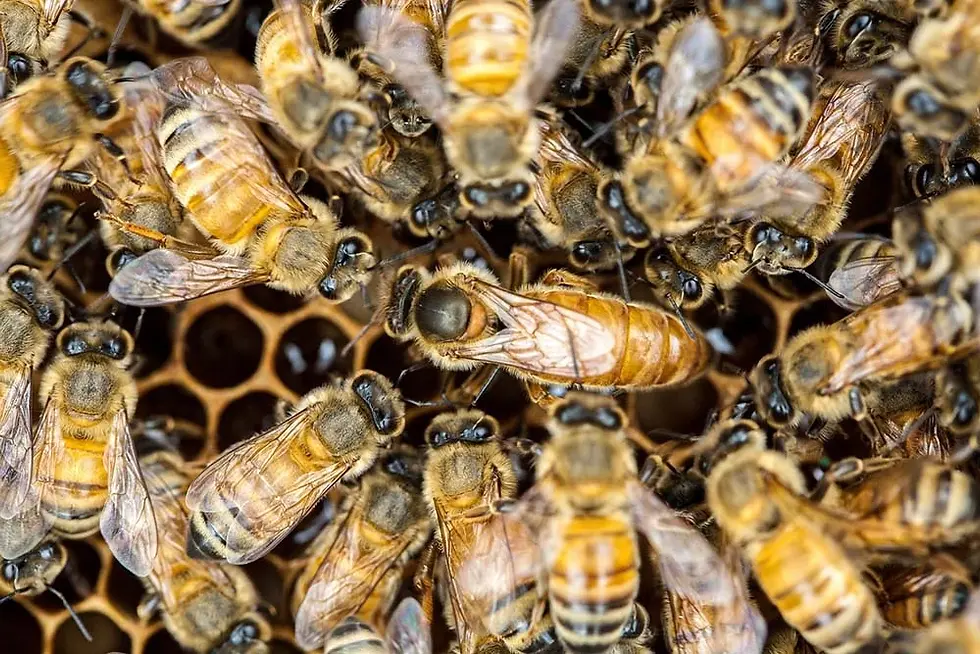
With BQCV or high viral loads, consider requeening with a healthy source (checked eggs/larvae); review queen-rearing practices to limit spread, including replenishment of starter and finisher colonies and repeated acaricide treatments.
Ultimately, the solution is not a fixed “recipe”, but knowledge and sound assessment of both dynamics and associations, with flexibility and continued adherence to operating protocols from veterinary institutes and research institutions.
Published: 3 December 2025
Author: Davide Simeone


Comments