
Impact of the Fungicide Tebuconazole on Drone Semen Quality
Successful reproduction depends on more than mating itself. In honey bees, one of the key factors is the quality of drone semen. Low sperm viability can compromise reproduction, a basic issue that underlies the discussions of subspecies and selective breeding that have shaped beekeeping in recent years. Understanding threats to honey bees means recognising the role of drones. Queens depend on drones for fertilisation, and beekeeping depends on the resulting colonies.

Honey bees are affected by the loss of natural habitats and by some modern agricultural practices. Losses of bees and colonies have been reported worldwide. Contributing factors include changes in seasonal conditions, bee diseases, poor husbandry and chemical pesticides (Gregorc, 2020). The effects of agricultural pesticides on honey bees are receiving increasing attention. Honey bees pollinate orchards (Halder et al., 2019), making agricultural land an important location for beekeepers to place their hives. However, poorly timed or excessive pesticide use can kill honey bees and disrupt biodiversity. Spraying while orchards are in bloom poses a particular risk to bees (Uhl & Brühl, 2019).
Tebuconazole (TEB), (RS)-1-(4-chlorophenyl)-4,4-dimethyl-3-(1,2,4-triazol-1-ylmethyl)pentan-3-ol, is a fungicide that inhibits ergosterol biosynthesis in fungi and helps control soilborne and foliar fungal pathogens (Ito et al., 2013). However, previous studies have reported adverse effects of TEB on tissues, including reproductive organs and cells. In a study using human placental trophoblast cell lines, exposure to 10 µM TEB decreased cell proliferation and migration, increased apoptosis and lowered mRNA levels associated with proteases, hormones, angiogenic factors, growth factors and cytokines (Zhou et al., 2016). Exposure to 0.1 µM TEB was reported to inhibit testosterone and oestrogen production in hamster ovarian tissue (Kjærstad et al., 2010), and 10 µM TEB inhibited progesterone synthesis in bovine luteal cells (Atmaca et al., 2018). In bovine testicular cells, 1 µM TEB reportedly increased testosterone secretion while reducing sperm viability (Kabakci et al., 2021).
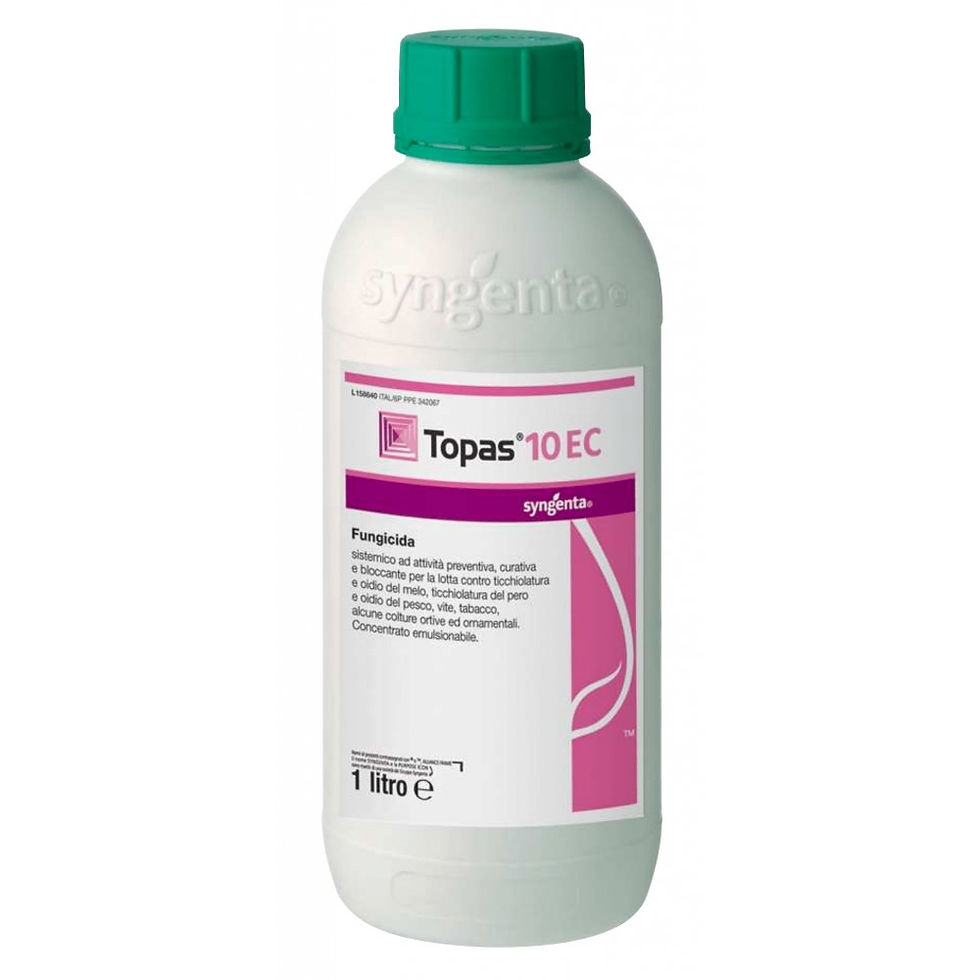
The study discusses TEB's acute toxicity and reported endocrine effects. EU approval of the active substance for plant protection products has been extended to 31 July 2028 under Commission Implementing Regulation (EU) 2026/1421. The reported median lethal dose (LD₅₀) in rats was 1,700 mg/kg (EFSA, 2015). For honey bees, the reported median lethal concentrations were 2,770 mg/L and 1,840 mg/L after two and four days of exposure, respectively. At concentrations 20–30 times lower, TEB reduced the activity of enzymes involved in metabolism, digestion and detoxification and affected expression of genes related to immunity, growth and apoptosis (Cang et al., 2023).
Several studies have detected TEB residues in plants and fruit. Exposure during the flowering of apple, pear, cherry and peach trees, which provide nectar and pollen for honey bees, is a potential concern (Fang et al., 2020; Li et al., 2020; Lucini & Molinari, 2009; Mohapatra, 2015; Szarka & Ramanarayanan, 2021). Previous studies have linked pesticide exposure on treated flowers or through contaminated food to acute toxicity or larval mortality (Fine et al., 2017; Yoder et al., 2017). Johnson et al. (2010) reported higher TEB residues in honey bees and lower levels in pollen and honey.
Drone semen quality is critical to reproduction. Sperm motility (MOT) is widely used to assess fertilising capacity. After mating, semen initially collects in the queen’s oviducts. A fraction of the sperm migrates to the spermatheca. During egg laying, sperm released from this organ fertilises eggs that can develop into workers. Sperm motility contributes both to sperm storage in the spermatheca and to fertilisation during egg laying (Cobey et al., 2013). Plasma membrane integrity (PMI) and mitochondrial membrane potential (MMP) are also important measures of semen quality. PMI indicates cell viability through selective membrane permeability, while MMP reflects mitochondrial function, which is involved in cellular ATP synthesis (Kaya & Uysal, 2023).Poor drone semen quality can compromise the continuity of a honey bee colony.
Environmental contaminants can affect semen quality. Although TEB has reported adverse effects on reproduction in various animals and in human cell models, its consequences for drone semen quality were unclear (Kabakci et al., 2021; Taxvig et al., 2007; Yan et al., 2023; Zhou et al., 2016). The study therefore investigated how the concentration and duration of in vitro TEB exposure affected drone sperm MOT, PMI and MMP.
Drones came from the Beekeeping Research Centre at Kırıkkale University. Semen was collected in May and June, when mature drones are most abundant in this continental climate. The authors used six colonies of similar strength with queens of the same age and collected 100 µL of semen in total with a Schley instrumental insemination device. They tested 0, 1, 10, 100 and 1,000 µM TEB at 33 °C, measuring semen quality at the start and after 24 hours of incubation (Cobey et al., 2013). All experiments were repeated at least six times.

After 24 hours of incubation, the highest TEB concentration (1,000 µM) significantly reduced sperm MOT, PMI and MMP (p < 0.05) compared with the other concentrations (Figure 4). The pattern of effects varied by concentration and exposure time. At 1,000 µM, MOT and PMI were already lower at the initial measurement (Figure 1), and MMP also fell after 24 hours (Figure 2).

Other in vitro and in vivo studies have reported reproductive effects of triazole fungicides, including TEB, in different species. In bovine testicular cells and semen, 1 µM TEB increased testosterone production by Leydig cells and reduced sperm viability (Kabakci et al., 2021). Effects on bull sperm were observed at a lower concentration than in this drone semen experiment. Differences in sperm structure and longevity may play a role. Under the storage conditions cited by the authors, drone sperm remained viable at room temperature for about six weeks and bull sperm for about two to three days (Burley et al., 2008; De Pauw et al., 2003). Oral TEB exposure during pregnancy in rats was associated with feminisation of male offspring and altered testosterone and progesterone production (Taxvig et al., 2007). TEB exposure in zebrafish impaired testicular development and reduced sperm motility (Yan et al., 2023).
Honey bees in the field can be exposed to multiple pesticides, including TEB. Research on the effects of pesticide exposure on honey bee colonies and reproductive performance remains limited.In a study on drones, oral exposure to 200 ppb imidacloprid reduced sperm motility and affected MMP, while PMI remained unchanged (Ciereszko et al., 2017).In another study, residues of amitraz, fluvalinate and coumaphos in beeswax used to rear honey bees reduced drone sperm viability by 5–20% (Fisher & Rangel, 2018). Kairo et al. (2016) found that fipronil exposure reduced PMI and ATP levels in drone sperm compared with controls (Kairo et al., 2016). Similarly, drones exposed to neonicotinoids showed a 20% decrease in sperm PMI compared with the control group (Straub et al., 2021).
Few studies have examined pesticide effects on drone semen in vitro. The available studies reported changes in sperm motility, plasma membrane integrity and/or ATP content after exposure to selected pesticides (Abdelkader et al., 2015; Inouri-Iskounen et al., 2020).

The authors describe this as the first in vitro study of the effects of tebuconazole on drone semen quality. Exposure to 1,000 µM reduced MOT and PMI at both measurement times and MMP after 24 hours. At concentrations from 0 to 100 µM, the experiment detected no statistically significant differences in these measures.Sperm motility is an important measure of reproductive quality. It declined at both measurement times in the 1,000 µM TEB group. Loss of plasma membrane integrity can damage cells and reduce sperm motility. Several studies have reported a correlation between motility and PMI (Ahmad et al., 2014; Fraser et al., 2001; Varisli et al., 2009). Sperm movement requires a continuous supply of energy. ATP provides energy for motility, and mitochondria contribute to its production (Abdelkader et al., 2015).MMP decreased significantly after 24 hours of exposure to 1,000 µM TEB. This change may have contributed to the loss of sperm motility by the end of exposure. PMI is commonly measured to assess drone sperm viability (Kaya & Uysal, 2023). Exposure to 1,000 µM TEB reduced PMI in vitro. The authors discuss a possible effect on the cell membrane. In fungi, TEB inhibits a cytochrome P450 enzyme involved in ergosterol synthesis, affecting membrane integrity (Ito et al., 2013). Hajer et al. (2020) reported inhibition of testicular P450 and glutathione S-transferase activity, epididymitis and lower sperm counts in rats. In vivo studies in rats (Hajer et al., 2020) and chickens (Serra et al., 2023) reported more sperm abnormalities and declines in motility, speed, counts and/or viability.
Oxidative stress is another possible explanation for reduced PMI. Previous work associated TEB exposure with lipid peroxidation, protein oxidation and severe DNA degradation in male reproductive organs (Hajer et al., 2020).MMP is an indicator of mitochondrial function. Previous studies showed that environmental pesticides can affect sperm ATP levels (Abdelkader et al., 2015; Kairo et al., 2016). In this experiment, 1,000 µM TEB reduced MMP at 24 hours. The authors discuss the possibility of sublethal effects from prolonged exposure or accumulation at lower concentrations.
Fungicide residues, including TEB, have been detected in the environment, in honey bees and in bee products. Long-term exposure at low concentrations is a separate question. Endocrine, metabolic or systemic effects depend on the organism, concentration and duration of exposure (Johnson et al., 2010).
Conclusion This study investigated the possible in vitro effects of the triazole fungicide TEB on drone semen quality. Plasma membrane integrity and mitochondrial function help sustain sperm viability and motility. The observed changes in these measures warrant further study of the possible implications for honey bee reproduction and the production of honey and other bee products under field conditions.
Abdulkadir KAYA (Department of Reproduction and Artificial Insemination, Faculty of Veterinary Medicine, Kırıkkale University, Kırıkkale, Türkiye; Ankara University, Institute of Health Sciences, Ankara, Türkiye) and Ruhi KABAKÇI (Department of Physiology, Faculty of Veterinary Medicine, Kırıkkale University, Kırıkkale, Türkiye)
Turkish Veterinary Journal, 6(2): 71–77, 2024 · DOI 10.51755/turkvetj.1577784


Comments