
Beeswax: properties and contamination
Chemical composition and physical properties
Beeswax is a heterogeneous material whose exact composition can vary slightly with nectar plants, bee age and environmental factors. Nevertheless, a general chemical profile can be described.
Chemical profile

Virgin beeswax contains more than 300 identified constituents or fractions. The following approximate proportions illustrate its main groups; values vary by sample and analytical method.
Fatty acid esters (about 70%): They make up the largest fraction. Many consist of long-chain primary alcohols (C₂₄–C₃₂) esterified with long-chain fatty acids (C₁₆–C₂₄). Myricyl palmitate, or triacontanyl palmitate (C₁₅H₃₁COOC₃₀H₆₁), is a prominent wax ester.
Free fatty acids (about 9–14%): Examples include cerotic acid (C₂₆H₅₂O₂) and melissic acid (C₃₀H₆₀O₂).
Hydrocarbons (about 13–16%): Mainly straight-chain alkanes (n-alkanes) with odd numbers of carbon atoms, including chains from C₂₁ to C₃₃. Heptacosane (C₂₇H₅₆) and hentriacontane (C₃₁H₆₄) are among the most abundant.
Minor constituents: These include free alcohols, commonly around 1%, as well as lactones, resins, pigments such as chrysin, and traces of propolis.
Physical properties
The physical characteristics of beeswax determine how it serves as a structural material in the hive:
Melting range: 62–65 °C.
Solidification temperature: About 60.5–61 °C.
Density: About 0.95–0.96 g/cm³ at 15 °C.
Saponification value: About 85–105 mg KOH/g, depending on the specification.
Acid value: 17–24 mg KOH/g.
These physicochemical parameters help assess wax purity and screen for possible adulteration.
Acaricide and pesticide contamination and residue limits
Because of its lipophilic nature, beeswax acts as a reservoir for lipophilic chemicals in the environment or those intentionally used by beekeepers to control disease and parasites, particularly the mite Varroa destructor.
Residue limits and regulations
There is no internationally harmonised maximum residue limit (MRL) covering beeswax generally, unlike the pesticide MRL framework for honey under Regulation (EC) No 396/2005, as amended. Hive foundation wax is not ordinarily consumed as food sensu stricto, although beeswax also has food uses. Residues can transfer to other hive products and affect bee health. Applicable limits depend on use and production standards, including organic rules. Frequently detected compounds include:
Synthetic acaricides: Coumaphos (an organophosphate), tau-fluvalinate (a pyrethroid), and amitraz (a formamidine), often detected through its breakdown products. Wax surveys such as Mullin et al. (2010) found some residues at mg/kg levels in brood comb wax. Chauzat et al. (2006) examined residues in collected pollen.
Agricultural pesticides: Insecticides including neonicotinoids and organophosphates, herbicides and fungicides. Surveys also find residues from these groups.
In EU organic production, wax is subject to specific origin and replacement requirements, including replacement with organic wax during conversion under Regulation (EU) 2018/848. The narrow exception for non-organic cappings wax has conditions, including evidence of freedom from substances not authorised in organic production. There is no general allowance for historical residues below a single threshold.
Effects on bee health: focus on reproductive castes
Substances accumulating in comb may chronically expose the whole colony to sublethal doses. Effects on reproductive individuals are particularly relevant to colony survival. Queen and drone cells are made of wax, so residues can expose developing bees during sensitive stages.
Effects on queens
Exposure of queen larvae to lipophilic residues in wax, including agricultural pesticides and in-hive acaricides such as coumaphos and fluvalinate, can affect queen development. Effects depend on the compound, dose and exposure:
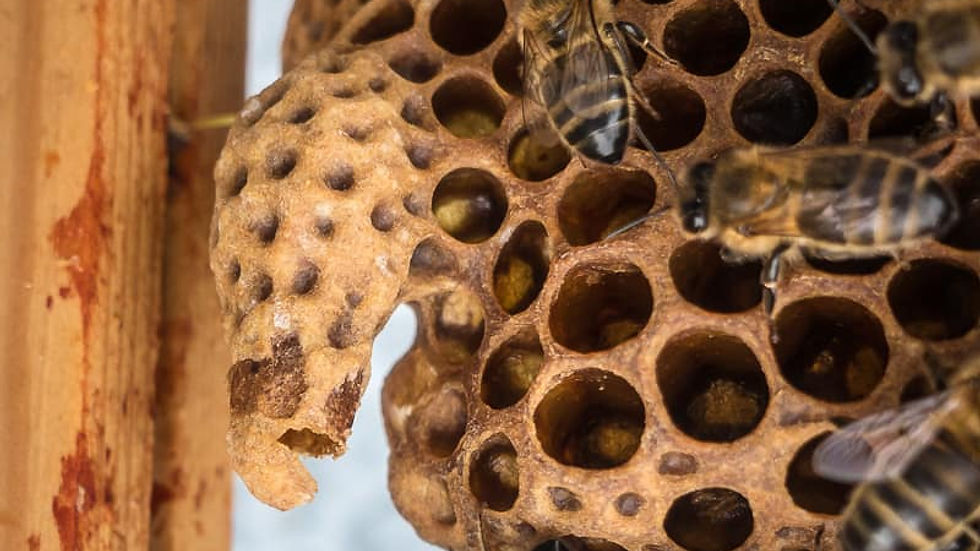
Reduced viability and survival: Some experiments involving coumaphos or tau-fluvalinate found reduced queen emergence or lower weight at emergence. These findings depend on dose and study design (Haarmann et al., 2002; Collins et al., 2004).
Reproductive abnormalities: Studies have reported effects on ovarian development or egg laying under some exposures. Poor queen performance can weaken a colony and contribute to supersedure by workers, but smaller ovarioles, reduced egg production and rapid replacement are not universal consequences of contaminated wax (Pettis et al., 2004; Collins et al., 2004).
Reduced longevity: Developmental exposure may affect adult queen survival even when it does not kill larvae immediately. The long-term consequences for colony stability depend on exposure and subsequent queen performance.
Effects on drones and sperm viability
Drones, essential for mating with queens, are also vulnerable. Their cells are generally wider and can contain contaminated wax, exposing developing drones to residues. A larger cell alone does not establish a higher residue concentration.
Altered development: Acaricide exposure during development can affect drones. Outcomes such as delayed emergence, smaller body size or shorter lifespan depend on the substance and dose; the study by Fisher and Rangel (2018) specifically assessed sperm viability after developmental exposure in contaminated wax.
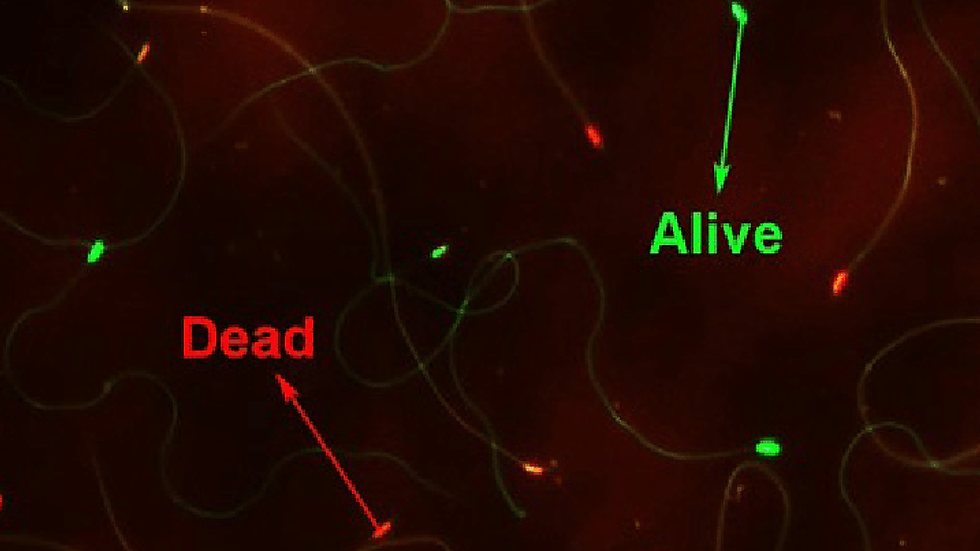
Semen quality and sperm viability: Experimental exposure to some neonicotinoids and to fipronil has affected drone reproductive measures such as sperm count, viability or motility, depending on the substance, dose and route (Straub et al., 2016; Kairo et al., 2017). These experiments are not all wax exposures and do not show that every low dose affects all measures. Poor semen quality can compromise queen fertility and colony performance, without making early colony failure inevitable.
Adulteration risks: paraffin and stearin
The high cost and limited availability of pure beeswax have encouraged fraudulent adulteration. Common adulterants include petroleum-derived hydrocarbons (paraffin wax) and materials rich in fatty acids of animal or plant origin (stearin or added stearic acid).
Paraffin wax
Paraffin wax is a mixture of solid saturated hydrocarbons (alkanes) derived from petroleum. Adding it changes the natural hydrocarbon profile of beeswax.
Risks for bees:
Structural weakening and thermal collapse: Paraffin can change the melting behaviour and mechanical properties of wax. Weaker comb can fail under honey loads or in summer heat, causing loss of brood and food. The risk depends on the type and proportion of paraffin and conditions; 10–15% is not a universal collapse threshold.
Interference with chemical cues: Beeswax contributes to chemical communication and nestmate recognition. Foreign hydrocarbons may interfere with those cues, but the effect depends on the adulterant and should not be assumed for all mixtures.
Potentially toxic impurities: Low-grade paraffin that does not meet food or pharmaceutical specifications may contain potentially harmful impurities, including polycyclic aromatic hydrocarbons (PAHs).
Stearin and stearic acid
Stearic acid (C₁₈H₃₆O₂) is a saturated fatty acid. Stearin is a commercial mixture, not pure stearic acid. These adulterants can alter hardness and workability and may be used alongside paraffin to disguise adulteration.
Risks for bees:
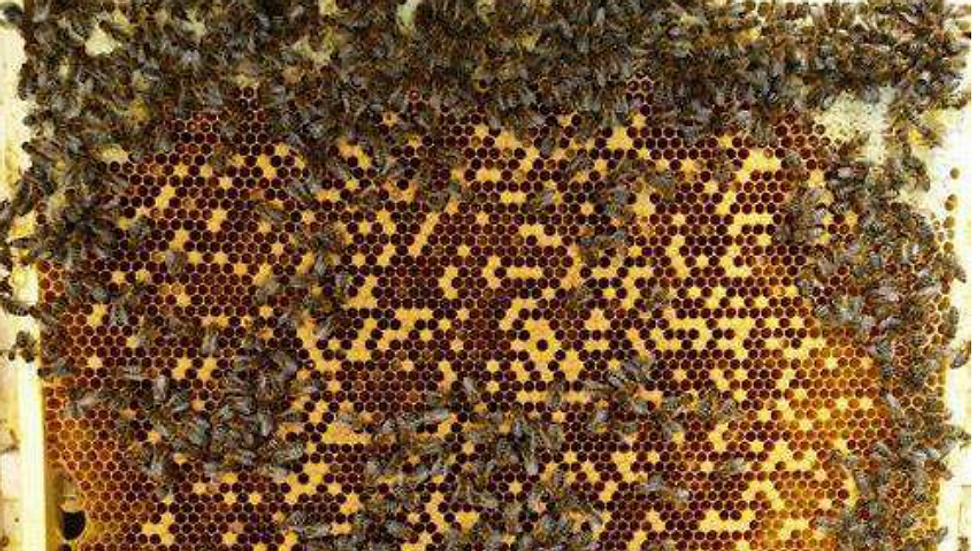
High brood toxicity (lethal effects): Unlike paraffin, which mainly weakened comb in a comparative experiment, stearin in foundation reduced brood survival directly. Experiments have found deaths of young larvae, sometimes leaving uncapped cells and a patchy brood pattern despite normal queen laying. That appearance can resemble disease, so it is not diagnostic by itself (Chęć et al., 2021, DOI: 10.1007/s13592-020-00833-7).
Comb acceptance and disrupted brood rearing: Workers may draw some adulterated foundations poorly, and laying or brood development in those areas may be impaired. Responses vary with the mixture. In the stearin experiment, the queens laid normally, so patchy brood did not establish that they avoided laying there.
Analytical methods for detecting impurities
Gas chromatography coupled with mass spectrometry (GC–MS) is a principal method for profiling wax lipids and detecting adulteration. Hydrocarbon profiles can reveal added paraffin, while free fatty acid profiles can indicate added stearin. Fourier-transform infrared spectroscopy (FTIR) is also useful for rapid screening.
Pesticide residues can be measured after extraction using methods such as QuEChERS, followed by liquid chromatography–tandem mass spectrometry (LC–MS/MS) or gas chromatography–tandem mass spectrometry (GC–MS/MS).
Conclusions
Beeswax quality is critical to both the structure of the hive and the reproduction and biological success of Apis mellifera. Pesticides and acaricides accumulating in wax can harm queen development and viability and impair drone reproductive function, including sperm viability, depending on exposure. Adulteration with stearin can cause substantial larval mortality and threaten colony health. Traceable wax supply chains, regular comb renewal and analytical checks for adulteration are important measures for safeguarding beekeeping and biodiversity.
Selected references
Chauzat, M. P., Faucon, J. P., Martel, A. C., Lachaize, J., Cougoule, N., & Aubert, M. (2006). A survey of pesticide residues in pollen loads collected by honey bees in France. Journal of Economic Entomology, 99(2), 253-262.
Collins, A. M., Pettis, J. S., Wilbanks, R., & Feldlaufer, M. F. (2004). Performance of honey bee (Apis mellifera) queens reared in beeswax cells impregnated with coumaphos. Journal of Apicultural Research, 43(3), 128–134. DOI: 10.1080/00218839.2004.11101123.
Haarmann, T., Spivak, M., Weaver, D., Weaver, B., & Glenn, T. (2002). Effects of fluvalinate and coumaphos on queen honey bees (Hymenoptera: Apidae) in two commercial queen rearing operations. Journal of Economic Entomology, 95(1), 28-35.
Kairo, G., Biron, D. G., Ben Abdelkader, F., Bonnet, M., Tchamitchian, S., Cousin, M., ... & Brunet, J. L. (2017). Nosema ceranae, Fipronil and their combination compromise honey bee reproduction via changes in male physiology. Scientific Reports, 7, 8556. DOI: 10.1038/s41598-017-08380-5.
Mullin, C. A., Frazier, M., Frazier, J. L., Ashcraft, S., Simonds, R., vanEngelsdorp, D., & Pettis, J. S. (2010). High levels of miticides and agrochemicals in North American apiaries: implications for honey bee health. PLOS ONE, 5(3), e9754.
Pettis, J. S., Collins, A. M., Wilbanks, R., & Feldlaufer, M. F. (2004). Effects of coumaphos on queen rearing in the honey bee, Apis mellifera. Apidologie, 35(6), 605-610.
Fisher, A., & Rangel, J. (2018). Exposure to pesticides during development negatively affects honey bee (Apis mellifera) drone sperm viability. PLOS ONE, 13(12), e0208630. DOI: 10.1371/journal.pone.0208630.
Serra Bonvehí, J., & Orantes Bermejo, F. J. (2012). Detection of adulterated commercial Spanish beeswax. Food Chemistry, 132(1), 642–648. DOI: 10.1016/j.foodchem.2011.10.104.
Straub, L., Villamar-Bouza, L., Bruckner, S., Chantawannakul, P., Gauthier, L., Khongphinitbunjong, K., ... & Williams, G. R. (2016). Neonicotinoid insecticides can serve as inadvertent contraceptive for honey bees. Proceedings of the Royal Society B: Biological Sciences, 283(1835), 20160506.
Published 15 May 2026 – Davide Simeone


Comments